


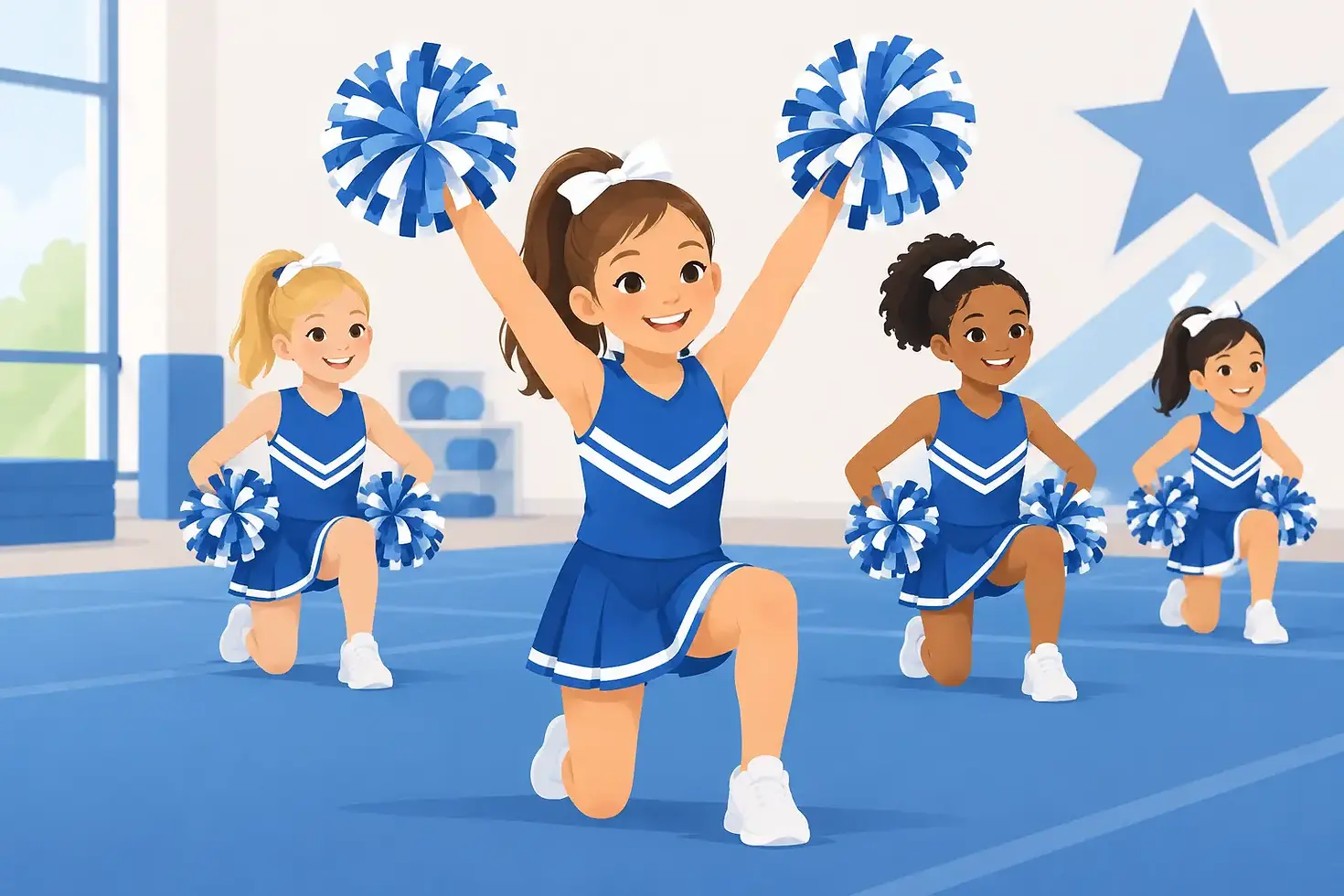
Best First Classes for Young Cheerleaders
A child does not need a standing back handspring, a competition bow, or prior dance experience to begin cheerleading. What they need is a class where they can try something new without feeling behind. The best first classes for young cheerleaders create that kind of start: structured enough to teach real skills, encouraging enough to build confidence, and safe enough for parents to feel comfortable from day one.
For many families, the first question is not, “Will my child make a team?” It is, “Will they have fun, be supported, and learn the right way?” A quality beginner program should answer all three. It should introduce the athletic foundations of cheer while helping young athletes practice listening, teamwork, perseverance, and pride in their own progress.
What a Great Beginner Cheer Class Should Teach
Cheerleading is a team sport with several moving parts. New athletes may learn motions and jumps, basic stunts, tumbling shapes, dance counts, sideline cheers, and how to perform with energy. That can sound like a lot, which is exactly why a well-designed first class matters.
The right beginner class does not rush children into advanced skills. Coaches break movements into manageable steps, demonstrate proper technique, and repeat fundamentals until athletes feel secure. A young cheerleader might begin by learning a strong high V, a clean touchdown, a safe forward roll, or a confident chant in front of a small group. Those skills may seem simple, but they build the body awareness and discipline needed for future progress.
Look for coaches who make corrections with clarity and encouragement. “Try again with locked arms” is more helpful than simply saying a skill is wrong. Young athletes need to know that effort matters, mistakes are part of training, and improvement comes one repetition at a time.
The Best First Classes for Young Cheerleaders
The best fit depends on your child’s age, personality, experience, and goals. Some children are ready to jump into a group class and meet new teammates. Others benefit from a smaller setting or a little extra time learning the basics. These are the most helpful entry points for young athletes.
Cheer FUNdamentals Classes
A true introductory cheer class is often the best place to start. Programs such as Cheer FUNdamentals are designed to teach the building blocks without the pressure of tryouts or a full competition commitment. Athletes can learn motions, jumps, beginning stunts, basic tumbling, chants, and performance skills in an age-appropriate environment.
This option works especially well for children who are curious about cheer but have never participated in organized athletics. It gives them room to discover what they enjoy while learning how a class is structured. They practice taking turns, following counts, working with partners, and celebrating teammates - all essential parts of cheerleading.
Parents should ask whether beginners are grouped by age and skill level. A four-year-old and a ten-year-old may both be new to cheer, but they often learn best through different activities, pacing, and coaching cues.
Cheer Club or Recreational Cheer Programs
For athletes who want more of the team experience, a recreational program or Cheer Club can be a great next step. These classes usually blend skill development with the excitement of learning routines and participating as a group. They can be an ideal bridge between a first-time class and a more demanding all-star team.
Cheer Club is a good choice for families who want consistency without immediately committing to a full competitive season. Young athletes gain the rhythm of regular practices, learn accountability to teammates, and begin to understand how individual effort affects the whole group.
The trade-off is that a team-style program may move at a quicker pace than a basic introduction class. If your child is still nervous about being in a group or needs more focused work on fundamental movement, beginning with Cheer FUNdamentals may help them enter Cheer Club feeling more prepared.
Beginning Tumbling Classes
Tumbling is an important part of all-star cheer, but it also stands on its own as an excellent first class. Beginning tumbling focuses on body positions, balance, strength, coordination, rolls, cartwheels, handstands, and safe progressions toward more advanced skills.
For children who love to move, flip, and challenge themselves physically, tumbling can be the perfect introduction to the gym. It develops confidence while teaching athletes that proper technique comes before bigger tricks. That order matters. A strong handstand shape and safe landing mechanics create the foundation for skills such as roundoffs and back handsprings later on.
A beginning tumbling class may be the best first option when a child is interested in cheer but not yet sure about performing or team routines. It lets them build athletic confidence first, then add cheer classes when they are ready.
Private Lessons for a Gentle Start
Private coaching is not only for advanced athletes. It can be a helpful starting point for a child who feels shy in groups, needs extra support, or wants to work on a specific skill before joining a class.
One-on-one instruction gives coaches the chance to adjust teaching methods to the athlete. Some children learn by watching, while others need hands-on drills, simple language, or more repetitions. Private lessons can also help parents understand where their child is in their development and which class would be the most appropriate next move.
That said, private lessons do not replace the social benefits of a group program. Cheerleading is built on communication and teamwork. For most beginners, a combination of group training and occasional private coaching offers the strongest balance.
Camps and Clinics
Short-term camps and clinics are a low-pressure way to test the sport. They give young athletes a chance to experience cheer motions, jumps, games, tumbling, and performance activities without a long-term commitment.
These events are especially useful for families with busy schedules or children who want to explore several activities before choosing one. A camp can reveal whether your child lights up when the music starts, enjoys learning routines, or prefers the focused challenge of tumbling. Just remember that camps are an introduction, not always a full skill progression. A weekly class is usually where consistent growth happens.
How Parents Can Choose the Right First Class
Start with your child, not the class name. Do they thrive in energetic groups, or do they need a quieter introduction? Are they excited to perform, eager to tumble, or mostly looking to make friends? Their answers can point you toward the right program.
Then look closely at how the gym approaches safety and placement. Beginners should be taught age-appropriate skills with proper progressions, attentive spotting when needed, and coaches who do not push athletes beyond their readiness. Ask how classes are grouped, what a typical practice looks like, and how coaches communicate progress with families.
The gym culture matters, too. Your child will learn more when they feel seen and supported. At Cali Coast Elite, athletes are coached in a small-gym, family-first environment where progress, accountability, and encouragement belong together. That kind of community helps young athletes stay motivated when a new jump feels hard or a skill takes longer than expected.
Signs Your Child Is Ready to Begin
There is no perfect age or personality type for cheerleading. Many children can begin introductory programs around age four, while older beginners can thrive just as easily with the right placement. Readiness is less about natural ability and more about whether a child can participate safely in a structured group setting.
A child may be ready if they can follow simple directions, take turns, move with reasonable body control, and recover after a small disappointment. They do not need to be fearless. In fact, learning to try a new skill even when it feels unfamiliar is one of the most valuable lessons cheer can offer.
If your child is highly anxious, struggles with separation, or becomes overwhelmed in busy group settings, that does not mean cheer is off the table. Consider a trial class, camp, or private lesson first. A supportive coach can help you identify the pace that allows your athlete to grow without feeling pressured.
Let Their First Experience Build a Strong Foundation
The first class should leave a young cheerleader feeling proud, not judged. They may come home talking about a new friend, a chant they learned, or the cartwheel they are still working toward. Those small moments are where confidence begins.
Give your athlete permission to be a beginner. With patient coaching, safe progressions, and a team that celebrates effort, their first cheer class can become the place where they learn to show up, work hard, and believe they belong.


Comments