


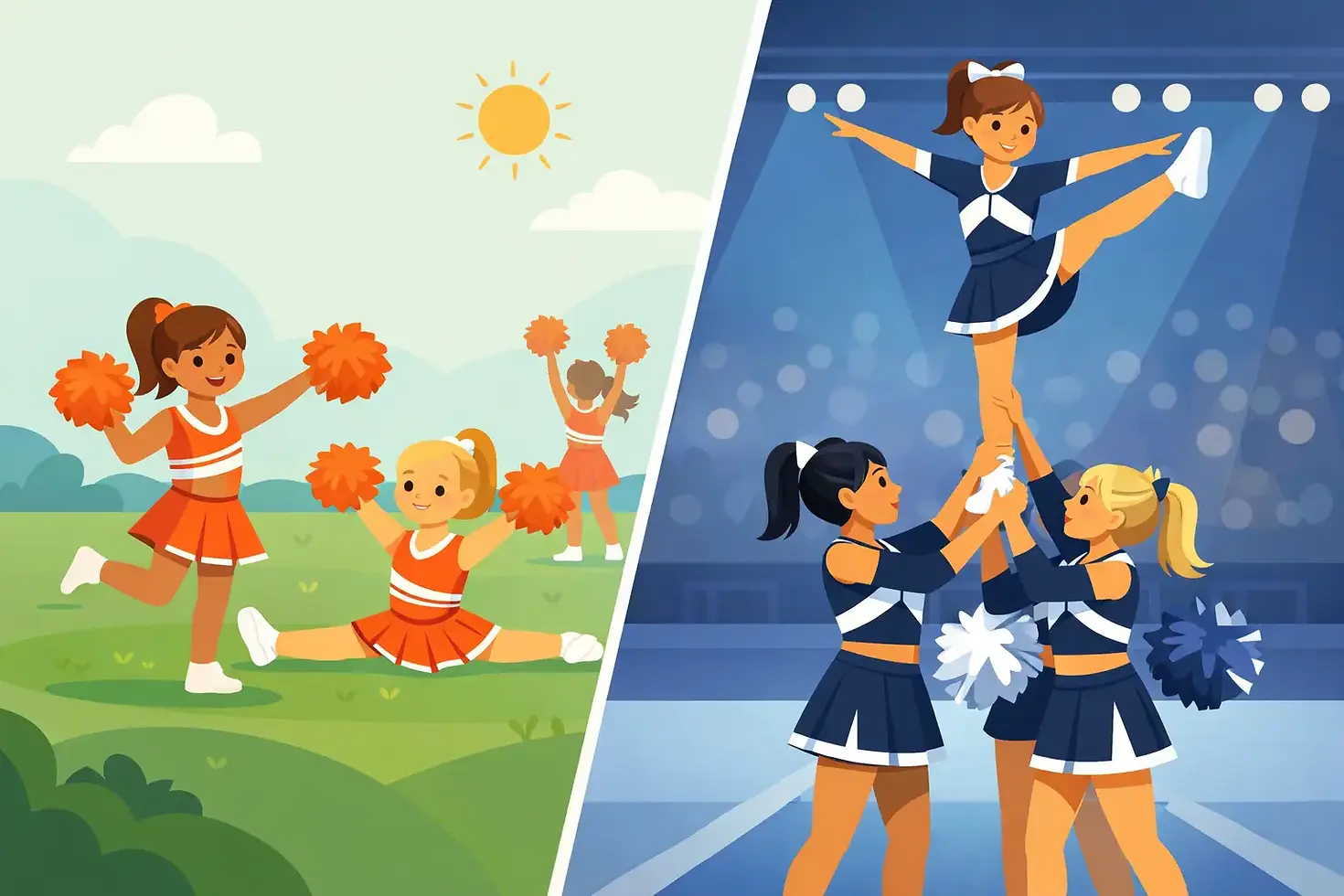
Recreational Versus Competitive Cheer for Kids
A child can light up on the cheer floor without needing the same experience as the athlete training for a full competition season. When families compare recreational versus competitive cheer, the best choice is rarely about which option is "better." It is about finding the right level of commitment, challenge, and support for your athlete right now.
For some kids, a weekly class is the perfect place to learn motions, jumps, tumbling basics, and teamwork. For others, the structure of a team, the excitement of performing, and the goal of improving all season long brings out their best. Both paths can build confidence. The key is understanding what each one asks of your family and what it gives back.
What Is Recreational Cheer?
Recreational cheer is an accessible, lower-commitment way for athletes to experience cheerleading. Programs may meet once or twice a week and typically focus on foundational skills: sharp motions, chants, jumps, basic stunts, dance, flexibility, and beginning tumbling. Some recreational programs perform at a showcase, community event, or end-of-session celebration, while others are class-based with no performance requirement.
This format works especially well for young athletes, beginners, and families who want to try cheer without committing to a full season. It also gives athletes a chance to see whether they enjoy the sport's mix of athleticism, performance, and teamwork before taking on a more demanding schedule.
Recreational cheer is not "less valuable" cheer. A well-coached introductory program teaches the habits that matter later: listening, body control, safe technique, encouraging teammates, and showing up ready to learn. For a child who is still building confidence in a new gym environment, that foundation can be exactly what they need.
Who Thrives in Recreational Cheer?
Recreational cheer can be a great fit for athletes who are new to organized activities, balancing several interests, or not yet ready for the time commitment of a travel competition schedule. It is also a smart option for a child who wants to improve tumbling or cheer skills in a positive setting without the pressure of competing.
Parents often appreciate the predictable schedule and more modest financial commitment. Athletes appreciate that they can learn, move, make friends, and celebrate progress without feeling like they must be competition-ready on day one.
What Is Competitive All-Star Cheer?
Competitive all-star cheer is a team sport built around a choreographed routine performed at competitions throughout the season. Athletes train consistently in stunting, tumbling, jumps, dance, motions, conditioning, and routine execution. Teams are generally placed by age and skill level so athletes can train safely and contribute with confidence.
A competition routine moves quickly. It may include standing and running tumbling, group stunts, pyramids, jumps, dance, and transitions, all performed with timing, energy, and precision. That is why competitive cheer requires regular practice, strong communication between families and coaches, and a willingness to keep working when a skill or section of the routine feels challenging.
Competition is exciting, but it is only one part of the experience. The real development happens in practice. Athletes learn to take corrections, trust their teammates, reset after a mistake, and celebrate progress that did not come easily. Those are skills that follow them far beyond a competition floor.
At a family-centered gym like Cali Coast Elite, competitive training should still feel personal. Athletes need coaches who see their individual progress, teach skills with safe progressions, and hold them accountable without losing the encouragement that helps them grow.
What Competitive Cheer Requires From Families
Competitive cheer asks for a greater commitment of time, energy, and budget than a recreational class. Practices are more frequent, athletes may attend choreography sessions, camps, clinics, and competitions, and families need to plan for team fees, uniforms, travel, and event costs. Exact requirements vary by program and level, so parents should ask for a clear season calendar and fee breakdown before enrolling.
There is also an emotional commitment. Teams depend on one another. When an athlete misses practice, it can affect stunt groups, formations, and the whole routine. A supportive competitive program helps families manage those expectations with upfront communication, realistic placement, and coaches who prioritize the athlete's long-term development over rushing a skill.
Recreational Versus Competitive Cheer: The Biggest Differences
The clearest difference is the purpose of the program. Recreational cheer is usually designed for exploration, fitness, foundational instruction, and fun. Competitive cheer is designed for team performance and sustained skill progression across a season.
The schedule is different, too. A recreational athlete may attend a weekly class with limited additional events. A competitive athlete has structured practices and a calendar that includes performances or competitions. Neither schedule is automatically right or wrong. A family with a packed school, work, or sports schedule may thrive in recreational cheer. A child who wants a deeper team experience may be ready to make competitive cheer a priority.
Skill expectations also change. Recreational athletes learn and practice skills at an appropriate pace. Competitive athletes work toward the specific skill and performance requirements of their team level. Good programs never treat a skill as something an athlete should force. Safe technique, proper progressions, spotting when needed, and age-appropriate placement matter more than moving quickly.
Finally, the team dynamic is more intensive in competitive cheer. Recreational athletes still make friends and learn cooperation, but competitive athletes share a larger responsibility for the team's routine. This can be incredibly rewarding for kids who enjoy belonging to a group and working toward a common goal.
How to Know Which Path Fits Your Athlete
Start with your child's motivation. Do they talk about performing and competing? Are they eager to practice skills between classes? Do they enjoy being part of a team, even when improvement takes patience? Those signs may point toward competitive cheer.
On the other hand, an athlete may be curious but unsure. They may want to try cheer alongside dance, soccer, school activities, or family commitments. Recreational cheer gives them room to build familiarity without making a major seasonal commitment. There is no prize for starting competitive cheer earlier than a child is ready.
Age and skill level matter, but readiness matters just as much. A young athlete can be ready for a beginner competitive team if they can follow directions, participate safely, and handle the routine of regular practice. An older athlete may benefit from a recreational or introductory program first if they are brand-new to cheer or need time to develop foundational tumbling.
Parents should also consider how their child responds to feedback. Competitive athletes receive corrections often because details matter in stunts, timing, technique, and performance. In the right environment, constructive coaching builds resilience rather than discouragement. Look for a gym where athletes are challenged with care and where coaches explain what progress looks like.
A Strong Pathway Does Not Have to Be One-Way
Choosing recreational cheer does not close the door on competition later. In fact, introductory programs, Cheer FUNdamentals, Cheer Club, tumbling classes, private lessons, and open gym can help athletes gain the confidence and skills that make a future team placement feel exciting instead of overwhelming.
The reverse can also be true. An athlete who has competed may decide that a recreational class, tumbling program, or half-year team better fits a new school schedule or changing interests. That is not quitting. It is adjusting the activity to support the athlete and the family well.
The healthiest cheer journey is not always a straight line. Some athletes progress quickly into full-season teams. Others need time, return after a break, or find that they love tumbling more than performing. A quality gym helps families make those choices without judgment.
Questions to Ask Before You Enroll
Before selecting a program, ask how athletes are placed, how coaches teach safe progressions, and what the full schedule looks like. Find out whether performances or competitions are required, what costs are included, and how the gym communicates schedule changes or athlete concerns.
It is also worth asking what happens when a child is nervous, struggles with a skill, or needs extra help. The answer tells you a great deal about the gym culture. Athletes grow fastest when they feel safe enough to try, supported enough to keep going, and accountable enough to take ownership of their effort.
Whether your child begins with a fun weekly class or steps onto a competitive team, cheer should give them more than a routine to perform. The right program gives them a place to work hard, be known, encourage others, and discover what they can do one practice at a time.


Comments