


How to Choose All Star Cheer Teams Near Me
A search for all star cheer teams near me can bring up a long list of gyms, programs, and promises. But choosing a team is not just about finding the closest facility or the team with the most trophies. It is about finding a place where your athlete can learn safely, work hard, build confidence, and feel known by the coaches and teammates around them.
For San Diego families, the right all-star program should feel exciting from the first visit while also giving parents clear answers about training, communication, team expectations, and athlete development. Competitive cheer is a meaningful commitment, so it is worth taking the time to find the right fit.
What All-Star Cheer Really Gives Athletes
All-star cheerleading is a team sport built around stunts, tumbling, jumps, dance, performance, and competition. Athletes train together over a season to perform a routine that depends on every person doing their job. One athlete's growth matters, but so does the group's ability to trust, adapt, and stay accountable.
That is why a strong cheer program develops more than physical skills. Athletes practice perseverance when a new tumbling skill takes time. They learn communication when a stunt group needs to make a correction. They gain confidence by performing in front of a crowd, then returning to practice ready to improve.
For a beginner, all-star cheer can be a welcoming introduction to structured athletics. For an experienced cheerleader, it can offer the coaching, repetition, and team environment needed to reach more advanced goals. The right path depends on the athlete's age, experience, readiness, and interest level.
How to Evaluate All Star Cheer Teams Near Me
Every gym has its own culture, training approach, and team structure. A competitive name or a packed schedule does not automatically make a program the right choice for your family. During a tour, class, or team evaluation, pay attention to how the gym runs from the moment you walk in.
Look closely at coaching and safety
Cheerleading requires technical coaching, especially in tumbling and stunting. Ask who teaches the athletes, how coaches are trained, and how skills are progressed. USASF-trained and certified coaches, clear safety procedures, and age-appropriate instruction all matter.
A good gym does not rush an athlete into a skill because it looks impressive. Coaches should build strength, body awareness, timing, and correct technique first. That approach may feel slower than chasing the next big trick, but it protects long-term progress and helps athletes earn confidence through real preparation.
Watch how coaches correct athletes, too. Strong coaching can be direct without being discouraging. Athletes should leave practice challenged, not embarrassed. A healthy gym creates high standards while making it safe for kids to ask questions, make mistakes, and try again.
Ask how team placement works
All-star teams are usually organized by age, skill level, and competition division. Placement should not be based on one moment at an evaluation. A thoughtful process considers tumbling, stunting ability, movement quality, coachability, maturity, attendance readiness, and where the athlete can contribute and grow.
Parents should be cautious of programs that promise a specific team before truly assessing an athlete. The best placement may not always be the team a child imagined, especially if they are new to cheer or returning after time away. Still, a good coach can explain the placement clearly and show your family what the next steps look like.
For younger athletes or first-time cheerleaders, introductory programs, Cheer FUNdamentals-style classes, Cheer Club options, or half-year teams can be a great starting point. These programs create a lower-pressure way to learn basics, experience team training, and decide whether a full competitive season is the right fit.
Consider culture as carefully as competition results
Trophies are exciting. They represent hard work, focus, and a great performance day. But they do not tell you everything about the daily athlete experience.
Ask how the gym communicates with parents, handles conflict, supports athletes after a tough practice, and recognizes effort beyond winning. Notice whether older athletes encourage younger ones. See if coaches know athletes by name. Listen for language that builds accountability and resilience rather than fear.
A small-gym, family-first environment can be especially valuable for athletes who benefit from personalized attention. At Cali Coast Elite, that kind of support is part of the training experience: athletes are expected to work with purpose while being coached as individuals, not numbers on a roster.
Questions Parents Should Ask Before Joining
A gym should be comfortable answering practical questions. Clear information helps families plan, and it is often a sign that the program is organized and respectful of parent partnerships. Before enrolling, ask about the season calendar, practice frequency, competition schedule, travel expectations, tuition, uniforms, choreography, and any additional fees.
It also helps to ask how attendance works. Competitive teams rely on consistent practice because routines involve timing, stunt groups, formations, and shared responsibility. Families should understand the commitment upfront, including how missed practices are handled and what flexibility is available for unavoidable conflicts.
You may also want to ask about the athlete's progression beyond the first season. Are there tumbling classes, private lessons, open gym opportunities, camps, clinics, or extra training options? A quality program should offer a clear path for athletes who want additional support, without making every add-on feel mandatory.
Matching the Program to Your Athlete
The best team for one child may not be the best team for another. An outgoing athlete may thrive in a busy competition schedule and advanced performance setting. A more reserved athlete may first need a smaller class environment, patient coaching, and time to build confidence before joining a full-year team.
Age matters, but readiness matters too. Athletes ages 4 through 17 are developing at very different rates physically, socially, and emotionally. A program should meet them where they are while still giving them a reason to stretch beyond what feels easy.
If your child has never cheered before, look for a gym that does not treat beginner status as a limitation. Foundational motion technique, jumps, basic stunts, dance, and tumbling are where confident athletes begin. If your child already has experience, ask how the gym will challenge their current skills while protecting the technique that supports higher-level training.
There is also a family fit to consider. Some programs are designed around heavy travel and a demanding competition calendar. Others offer half-year teams or developmental programs that make room for families who are exploring the sport, balancing school activities, or building toward a future full-year season. Neither option is automatically better. The right choice is the one your family can commit to with enthusiasm and consistency.
What a Great First Visit Should Feel Like
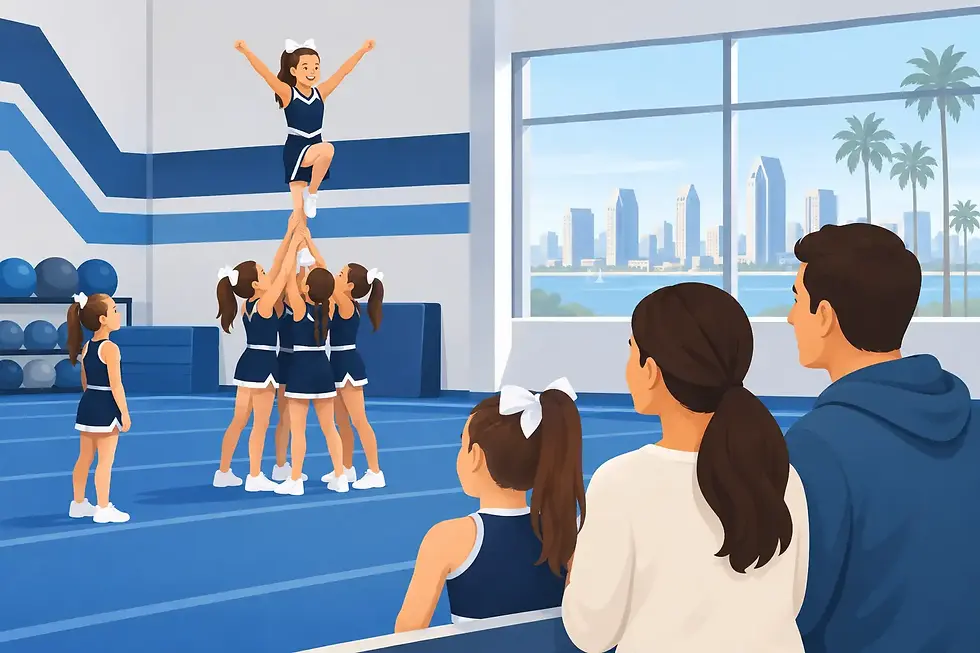
A first visit should give your athlete a real sense of the gym, not just a sales pitch. They should be able to see the training floor, observe how coaches interact with athletes, and ask questions about what practice is like. Parents should come away with a clear understanding of costs, expectations, and the next available step.
Pay attention to your child's reaction after the visit. Were they excited to learn? Did they feel welcomed? Did they understand that cheer will require effort, repetition, and commitment? The goal is not to find a program where every practice feels easy. The goal is to find a place where your athlete feels supported enough to keep showing up for the hard work.
The right cheer home gives athletes room to grow into stronger teammates, more confident performers, and more resilient young people. Start with a visit, ask honest questions, and choose the team environment that makes your child want to work hard, belong deeply, and keep reaching for the next skill.


Comments