


Is Cheer Safe? What Every Parent Should Know
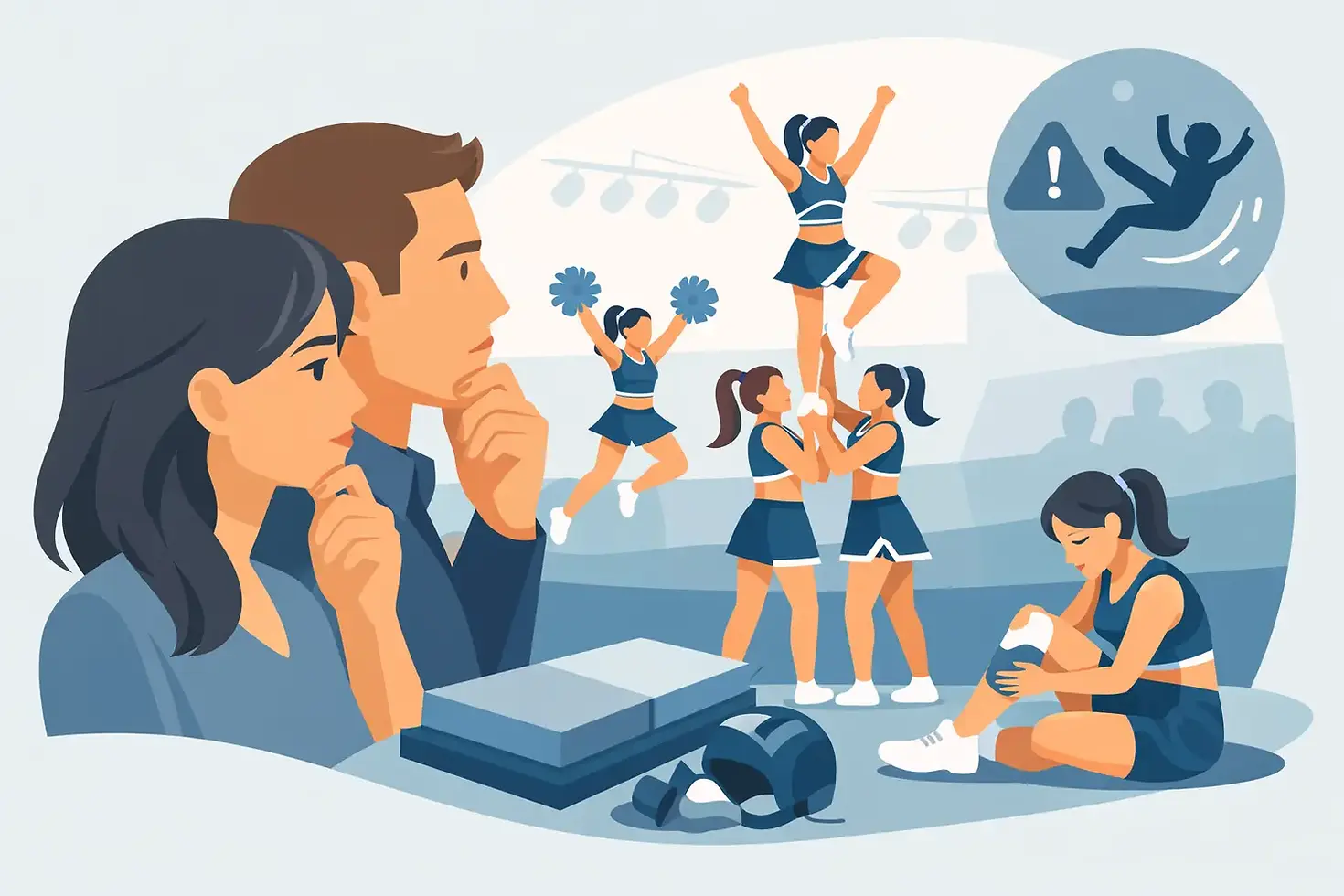
A young athlete learns her first cartwheel, sticks the landing, and runs to show her parents. That moment is exciting, but it also raises a fair question: is cheer safe for my child? Cheerleading is an athletic sport involving tumbling, jumps, stunts, dance, and teamwork. Like gymnastics, soccer, football, or any activity with physical movement, it carries risk. The goal is not to pretend otherwise. The goal is to give athletes the coaching, preparation, supervision, and support that help manage that risk responsibly.
For families, safety should be one of the first questions asked when choosing a program. A quality cheer gym does more than teach impressive skills. It builds athletes step by step, places them appropriately, maintains clear expectations, and creates a culture where children feel comfortable speaking up.
Is Cheer Safe for Kids?
Cheer can be a safe and positive sport for kids when it is taught in a structured environment with qualified coaches, appropriate athlete placement, and a strong commitment to skill progression. It is not a one-size-fits-all answer because safety depends on the program, the athlete’s readiness, the level of supervision, and the type of skills being performed.
A beginning cheerleader learning motions, jumps, basic tumbling, and foundational stunts has very different demands than an experienced athlete training elite-level tumbling or competition routines. Good coaching recognizes that difference. Athletes should not be pushed into skills simply because they are popular, because a teammate can do them, or because a competition routine needs them.
At Cali Coast Elite, athletes are challenged to grow while being coached with age-appropriate progressions and personal attention. That balance matters. Confidence is built when athletes know they are ready for the next step, not when they feel pressured to skip steps.
What Makes a Cheer Program Safer?
Safety starts long before an athlete goes into the air or attempts a back handspring. It begins with how a gym evaluates athletes, organizes classes, teaches technique, and responds when something does not feel right.
Qualified coaches and active supervision
Coaches should understand proper technique, spotting, progressions, and safety standards for the skills they teach. In cheer, a coach’s job is not just to count an eight-count or clean up motions. They must watch body positions, identify fatigue, correct unsafe habits, and know when an athlete needs more practice before advancing.
Look for a program that values coach education and follows current cheer safety standards. USASF-trained and certified coaches bring useful knowledge to stunt instruction, athlete placement, emergency awareness, and the evolving expectations of all-star cheerleading.
Active supervision is just as important as credentials. Athletes need coaches who are present, attentive, and willing to stop a drill when form breaks down. A crowded class with too little coaching attention can make even basic progress harder to manage safely.
Progressions that respect each athlete
A safer gym does not treat a new skill as a quick milestone. It treats it as a process. Before an athlete works on a more advanced tumbling pass, they need reliable foundational shapes, strength, flexibility, body awareness, and confidence in the skills that come before it.
For example, a back handspring is not simply about throwing the skill. It requires strong handstand positions, controlled jumps, shoulder mobility, core engagement, and consistent technique. The same is true in stunting. Athletes learn grips, body positions, timing, communication, and safe dismounts before moving into more difficult stunt sequences.
Progressions can feel slower than a child wants, especially when friends are learning new skills. But slower is often smarter. A well-earned skill is more likely to be technically sound, repeatable, and enjoyable.
Appropriate groups, surfaces, and equipment
Athletes should train on appropriate flooring for the activity. Spring floors, panel mats, crash mats, and other training equipment can support learning when used correctly under coach supervision. Equipment is not a substitute for technique, but it can help athletes safely develop confidence and understand movement patterns.
Thoughtful grouping also helps. Beginners need space to learn without being overwhelmed. Advanced athletes need coaching that meets the demands of higher-level skills. Age and skill level both matter, particularly in stunting, where size, strength, maturity, and experience can affect placement decisions.
A culture where athletes communicate
The safest athlete is not the one who never gets nervous or tired. It is the athlete who knows how to communicate. Children should feel comfortable saying, “My wrist hurts,” “I do not understand,” “I am scared,” or “Can I try that again with a spot?”
Parents can support this by teaching athletes that honesty is part of being accountable. Working through normal nerves is different from ignoring pain. A supportive gym culture helps athletes learn that asking for help is a sign of maturity, not weakness.
Stunting Safety Depends on Teamwork
Stunting is one of the areas parents ask about most, and for good reason. It involves athletes lifting, supporting, catching, and trusting one another. Done well, it develops focus, communication, responsibility, and teamwork. Done carelessly, it can create unnecessary risk.
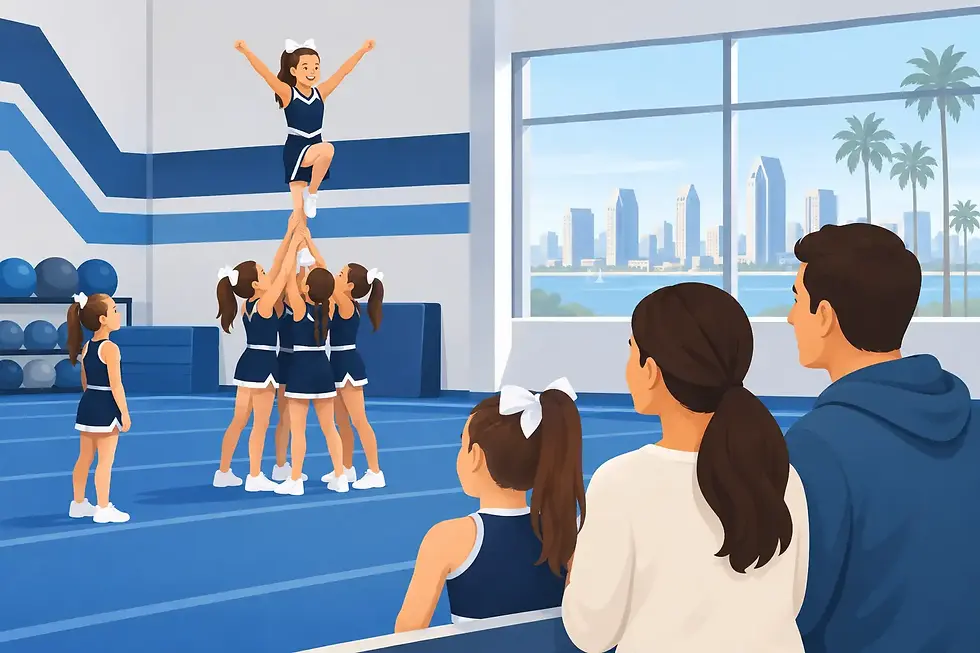
Safe stunting requires trained coaching, proper group placement, clear verbal counts, and athletes who understand their individual jobs. Bases, flyers, and back spots each have responsibilities. Everyone must stay engaged from the start of a stunt through the dismount. A strong stunt group is not just physically capable. It is connected, communicative, and consistent.
Athletes also need to know that a stunt does not have to go up if the group is not ready. If someone is absent, injured, distracted, or learning a new role, coaches may modify the skill, add support, or revisit fundamentals. Those decisions protect athletes and reinforce that doing things correctly matters more than doing them quickly.
Tumbling Safety Is About Technique, Not Pressure
Tumbling can be one of the most exciting parts of cheer, but it should never become a race. Skills are built through repetition, strength, drills, and experienced spotting. Athletes progress at different speeds, even when they are the same age or on the same team.
Parents can help by avoiding comparisons. Instead of asking, “Why does she not have her back tuck yet?” try asking, “What is she working on next?” That shift keeps the focus on development instead of pressure.
Private lessons, tumbling classes, and open gym practice can be valuable tools when they are used with purpose. More training is not always better if an athlete is exhausted, sore, or practicing with poor form. A coach can help families decide whether an athlete needs more repetitions, more strength training, more flexibility, or simply more time.
How Parents Can Help Keep Cheer Safer
Parents are a key part of a child’s cheer experience. You do not need to know every stunt term or tumbling drill to support safety at home. You do need to stay engaged, communicate with coaches, and pay attention to how your athlete is feeling.
Make sure your child has consistent sleep, hydration, and meals that support active training. Encourage warm-ups rather than rushed arrivals, and make recovery part of the routine after demanding practices. If your athlete has pain, swelling, dizziness, or a change in how they move, take it seriously and communicate with the gym. Medical concerns should be evaluated by an appropriate health professional before an athlete returns to activity.
It also helps to ask direct questions before joining a program. How are athletes placed? What are the coach-to-athlete ratios? How are new skills introduced? What happens when an athlete is injured or misses practice? How does the program communicate with families? Clear answers are a good sign that a gym has systems in place.
The Right Gym Balances Ambition and Care
Competitive cheer asks athletes to be disciplined. They learn to show up prepared, trust their teammates, accept corrections, and keep working when a skill takes time. Those are powerful life lessons, but they should be taught in an environment where athletes are treated as people first.
The right program does not lower standards to avoid challenge. It creates a pathway for challenge. Athletes can work toward big goals while coaches protect the fundamentals that make long-term progress possible: technique, strength, communication, recovery, and trust.
Cheer can give children a place to move, belong, compete, and discover what they are capable of. When families choose coaching that puts development and safety at the center, athletes have more room to grow with confidence - on the floor, with their team, and far beyond the sport.


Comments